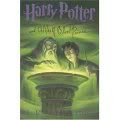
 Today’s Nature has an interesting letter suggesting a way to introduce genetics to children–even kids as young as 5, they suggest. Harness pop culture–specifically Harry Potter–in order to introduce basic concepts in genetics.
A portion of the correspondence reads:
Most children are familiar with J. K. Rowling’s stories about the young wizard Harry Potter…. They are set in a world like our own, but populated by a minority of people with supernatural powers (wizards and witches) and a majority of people without (muggles).
Wizards or witches can be of any race, and may be the offspring of a wizard and a witch, the offspring of two muggles (‘muggle-born’), or of mixed ancestry (‘half-blood’).
This suggests that wizarding ability is inherited in a mendelian fashion, with the wizard allele (W) being recessive to the muggle allele (M). According to this hypothesis, all wizards and witches therefore have two copies of the wizard allele (WW). Harry’s friends Ron Weasley and Neville Longbottom and his arch-enemy Draco Malfoy are ‘pure-blood’ wizards: WW with WW ancestors for generations back. Harry’s friend Hermione is a powerful muggle-born witch (WW with WM parents). Their classmate Seamus is a half-blood wizard, the son of a witch and a muggle (WW with one WW and one WM parent). Harry (WW with WW parents) is not considered a pure-blood, as his mother was muggle-born.
Interesting idea. You teachers out there, any other good suggestions?
23 Comments
Craig · 11 August 2005
You'll need to explain Squibs, like Filch and Mrs. Figg. And the wide difference in ability among wizards; Neville is almost powerless himself (at least for the first 4 years).
Wizarding ability is more like smarts; you can somewhat trace a connection from generation to generation, but there are other factors, like environment, and sometimes just a fluke either for good or ill.
Rich · 11 August 2005
Random mutation!
Andrea Bottaro · 11 August 2005
Wizardy is clearly a quantitative, multigenic trait with variable expressivity and incomplete penetrance. I wouldn't discount a role for epigenetic effects either. Waaaay over the head of kindergardeners and creationists... maybe third graders. ;-)
Stoffel · 11 August 2005
I'm not well-versed in HP lore (blasphemy! I know.) Are there any instances of muggles being born of two wizards? That would invalidate the mendelian hypothesis, correct?
darwinfinch · 11 August 2005
Children of wizards without powers are referred to as "squibs," not "muggles," and there isn't evidence in the books about "squib" qualities continuing beyond a single generation.
I've been reading the new HP to the kids, and strangely enough had been pondering this very, silly, question myself just yesterday.
Grey Wolf · 11 August 2005
Ummm... Seamus is known by the readers to be pureblood, even if he doesn't know it himself, because JKR said as much in one of the Q&A in her website. She essentially dropped his backstory from the books to make room for Neville's, which is far more important (in a nutshell, his father was a wizard who abandoned his mother, who remarried. His mom never knew the guy was a wizard).
Wizard pairings can indeed result in non-magical children, called squibs, which, although relatively rare, are possibly three or four per generation (small number of people in the wizard world). Also, magical gifts oscillate a lot between individuals, so it's not a single gen, I'm afraid.
As an old timer from HP4GU (Harry Potter for Grown Ups, a yahoo discussion group mostly oriented towards deep discussion of the topics - nothing x-rated, name notwhistanding), I can keep up with that kind of topic far better than I can with any other in PT, I must say.
Hope that helps,
Grey Wolf
Aaron F. · 11 August 2005
"You'll need to explain Squibs, like Filch and Mrs. Figg."
Ms. Figg isn't a Squib!!!! But I think Rich is on the money: IIRC, they say that Squibs are "really rare," which is consistent with Squibhood being caused by a destructive mutation in one of the W genes.
"And the wide difference in ability among wizards; Neville is almost powerless himself (at least for the first 4 years). Wizarding ability is more like smarts; you can somewhat trace a connection from generation to generation, but there are other factors, like environment, and sometimes just a fluke either for good or ill."
I agree!
The ability to talk to snakes is another power in HP that seems to be genetic. I recall reading something about all the descendents of Slazar Slytherin being able to do it... would that make it a rare but dominant allele? Also, it's implied that Voldemort transferred his ability to talk to snakes to Harry when he tried to kill him, which ties in neatly with the way viruses and bacteria can exchange DNA with their hosts and each other!
KiwiInOz · 11 August 2005
Ms Figg is a squib! She says she is at Harry's trial in HP and the Order of the Phoenix.
Chip Poirot · 11 August 2005
My money is on the trait having multiple genes coding for different powers. Perhaps a single allele model will not work here.
I suspect we need to work out the epigenetic rules.
Engineer-Poet, FCD, ΔΠΓ · 11 August 2005
Just think: if the wizards studied science, they would have learned about the genetics and be able to correct such destructive mutations (as well as other birth defects).
There is much the adults of the HP world could learn from muggles. ;-)
Jeremy · 11 August 2005
"Ummm... Seamus is known by the readers to be pureblood, even if he doesn't know it himself, because JKR said as much in one of the Q&A in her website. She essentially dropped his backstory from the books to make room for Neville's, which is far more important (in a nutshell, his father was a wizard who abandoned his mother, who remarried. His mom never knew the guy was a wizard)."
All that is true about DEAN THOMAS. Seamus is pureblood, Dean is halfblood.
I remember clearly that JKR said that in these exact words: "Magic is a dominant, highly resilient gene."
Nick (Matzke) · 12 August 2005
So, what are we to make of Voldemort accidentally transferring powers to Harry Potter? Lateral gene transfer?
Grey Wolf · 12 August 2005
Staffan S · 12 August 2005
Wizard pairings can indeed result in non-magical children, called squibs, which, although relatively rare, are possibly three or four per generation (small number of people in the wizard world). Also, magical gifts oscillate a lot between individuals, so it's not a single gen, I'm afraid.
Possibly the magic ability is only partly inherited. One explanation for squibs and muggle-born wizards/witches would be that the allele(s) for magic are fairly common in the population, but that they are expressed only when they are triggered by some external factor. This factor would have to act sometime in the early years (wizards and witches develop their abilities slowly up to around age eleven, and there is no mention in the books of someone gaining magical powers as an adult.) This factor could simply be exposure to magic, or to some microorganism that is endemic to the wizarding community. Muggle-born wizards/witches could come from accidental exposure to either of these. If it is a microorganism, squibs could be explained by immunity from an earlier infection by a related organism. It would be an exciting topic for a research project!
Staffan S · 12 August 2005
The first paragraph is a qoute from Grey Wolf. I had it formatted right in the preview, but it seems it disappeared when I was prompted to add my email.
Engineer-Poet · 12 August 2005
Hey, maybe it's midichlorians.
(If you have to edit, hit "back" before trying again.)
Tara Smith · 12 August 2005
gravitybear · 12 August 2005
My wife suggested this to me: What about Hagrid? He's half-ogre, and he has wizarding powers (although he is, of course, forbidden to use them *wink*.)
Shaggy Maniac · 12 August 2005
Wouldn't a particularly simple explanation for squibs be an epistatic locus controlling the W/M locus? Homozygous recessive at the epistatic locus and, wa-la, no expression of the W/M locus...
Dan S. · 12 August 2005
"Wizardy is clearly a quantitative, multigenic trait with variable expressivity and incomplete penetrance. "
Oh, that's beautiful.
And Hagrid's half-*giant*!
Geez. You wasting your time reading science or something?
Laurel · 12 August 2005
On the Chamber of Secrets Forums, www.cos.forums.com, a Harry Potter Website, this was discussed from the point of view of how wizards actually differed from muggles.
I believe that wizards are simply more evolved than normal humans and that they have an inate ability to manipulate the quantum universe. It just seems like magic to us muggles.
Marek14 · 13 August 2005
However, it looks like that's the ONLY thing they have in addition. I remember that I was always struck by their minds and behaviour - the automatically assumed belief that they are "better" then muggles, for example, when they prefer to mess with their minds rather than give them a simple explanation or even an apology. Or the part with the medieval witch-trials - real wizards and witches were quite safe from the Inquisition since they could simply protect themselves from fire, but they never made any attempt to save those countless innocent humans who were burned at a stake instead of them.
I have this vague ideas that they saw thos without magical abilities as "not quite human", and I was deeply disturbed by it because the books seem to strengthen this view by casting almost all muggles as self-centered and unpleasant persons.
From my time reading this blog (among others), I came to understanding that Rowling was exactly right, though. If some humans WERE wizards, they WOULD behave like that. It's not a truth I would like, but it seems to be.
gravitybear · 15 August 2005
Dan S.,
Mea culpa.
Slight brain freeze on Hagrid's ancestry.
Thanks for the correction.