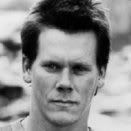
Have you ever wondered how Kevin Bacon and the lights of fireflies related to malaria and power grids? I know it's something that's kept me up many a sleepless night. One word: interconnections.
Many of you have probably heard of the
"Six degrees of Kevin Bacon" game. This is based on the work of Stanley Milgram beginning in the 1960s, and brought up again more recently in a 1998 Nature paper,
"Collective Dynamics of 'Small-World' Networks," by mathematicians Watts and Strogatz. Milgram conducted a number of studies using his "lost letter technique," in which letters were sent out and then needed to be forwarded onto reach their destination. In one instance, Milgram sent out 160 letters to individuals in the midwest, with instructions to pass them along to acquaintances who would be most likely to reach his stockbroker friend back east. Almost all of the letters that reached the stockbroker did so via one of 3 friends---and most did it within 6 steps--hence the "six degrees of separation" idea.

Similarly, Duncan Watts first became interested in the "small world problem"---the idea that all of us are more closely connected than we realize---after watching fireflies flash in synchrony, and wondering how they accomplished that. What Watts, Strogatz, Milgram, and others were investigating boiled down to a series of links in a network---hubs and connectors. As Watts and Strogatz showed in their 1998 paper, all it took to make a "small world" from a regular network was the addition of a few "short cuts" (see figure from their paper, right). This elegant and seemingly simple structure of networks explains not only connections between movie stars and
scientists but also cellular metabolism,
ecology webs and the World Wide Web itself.
Continued at Aetiology
29 Comments
Barry Gibbons · 28 November 2005
Whatever
BWE · 28 November 2005
You just wanted to post a picture of Kevin Bacon. Admit it.
The article, using the shortcuts is alluding to the more important findings of the study which were that less than three people delivered all the letters to each individual. Meaning that our 6 degrees of separation are totally reliant on a few very well connected individuals. Read "the Tipping Point"
http://www.amazon.com/gp/product/0316346624/002-3054316-0638417?v=glance&n=283155&n=507846&s=books&v=glance
It's a good read. It is neat to see how it relates to biology in general though. It's some kind of emergent system a la sim city with the well connected individuals being the variable.
KeithB · 28 November 2005
Would Typhoid Mary be considered a Superspreader?
http://www.straightdope.com/mailbag/mtyphoidmary.html
theo · 28 November 2005
I don't understand the excitement about small-world and scale-free networks.
"There must be some deeper principle at work" is not exactly a unifying concept on the level of, say, natural selection. Frankly, it has the characteristic ring of physicists BSing about biology.
Here's the alternative: since mathematical tools for characterizing network topology are fairly crude, networks with many disparate causes (e.g. epidemiology and internet engineering) are mixed together under one "small-world" rubric. There are a plethora of reasonably effective generative models for small-world networks; this seems to confirm the hypothesis that they are an inappropriate overgeneralization.
Evelyn Fox Keller has an interesting critique of small-world networks, which should probably be read in conjunction with the books you recommend: http://www3.interscience.wiley.com/cgi-bin/abstract/112092785/ABSTRACT
BWE · 28 November 2005
RIght. 6 degrees of disease. Y'kmow, I bet the National center for disease control has some pretty good computer models for this stuff.
Tara Smith · 28 November 2005
Steviepinhead · 28 November 2005
There may have been some unintended irony in your final phrase: "a rage of fields."
Heck, that finally explains some of the interactions that go on at PT!
The Ghost of Paley · 28 November 2005
Tara Smith · 28 November 2005
BWE · 29 November 2005
Dembski's Butt-whuppin of Lilith is really a misinterpretation of historical data. "Lilly" was his mother and she often gave him "Butt whuppins" when ever he questioned her authority. This led him later in life to rationalize the dictates that didn't make sense of every authority figure he ran across for the rest of his life. His upholding of -creationism- ID is really his infantile fear of a "Butt-Whuppin" manifesting on a larger stage.
RBH · 29 November 2005
Tara Smith · 29 November 2005
Thanks! Good reference, and I hope Ghost was joking earlier...if that's a butt-whippin' by Dembski, I'm Mother Theresa.
'Rev Dr' Lenny Flank · 29 November 2005
The Ghost of Paley · 29 November 2005
'Rev Dr' Lenny Flank · 29 November 2005
'Rev Dr' Lenny Flank · 29 November 2005
The Ghost of Paley · 30 November 2005
Steviepinhead · 30 November 2005
Links to back up any of these claims, pal?
I mean, of course, the ones that you contend actually propose a theory of ID, a mechanism, testible hypotheses? Don't bother to link to the gobbledygook that simply says--at much more tedious length--things to the effect of, "Gosh! That sure looks designed--and I really wish and hope that it were designed--so therefore it must be designed!"
'Rev Dr' Lenny Flank · 30 November 2005
'Rev Dr' Lenny Flank · 30 November 2005
The Ghost of Paley · 30 November 2005
Steviepinhead · 30 November 2005
Couldn't be bothered to set forth the theory, the mechanism, and the hypotheses, could you, ghosty?
(shrug)
One of Dembski's pdf's never loaded: blank pages (but presumably no net loss of information, heh heh).
The other pdf is just the old Dembski razzle-dazzle: extremely unlikely things are extremely unlikely. Irrelevant to evolution, since evolution is not a random procedure. None of the prior criticisms of his work are addressed. Further (and this also applies to the laughable Luskin), no mechanism whereby intelligent agents are able to make untenable leaps in information "space" is presented. If intelligence didn't evolve, where did it come from? How does "intelligence" generate novel, exceedingly-unlikely solutions?
It doesn't look like your other friend quite understands what a frameshift is, and isn't. In any event, no ID mechanism for generating one is set forth, which brings us back to the top of this comment: until you've got a theory, a mechanism, and some testible hypotheses, ya got nuttin'.
'Rev Dr' Lenny Flank · 30 November 2005
The Ghost of Paley · 30 November 2005
By the way, I think the people on this board are overly infatuated with mechanism-driven hypotheses. Since design is a state variable, it exists independent of any path of creation. The scientist must first establish the existence of the phenomenon under study, then worry about cause. I think that Dembski has achieved the first goal. Unfortunately, the intellectual death created by the poisoned Kool-Aid of Darwin's Folly prevents the cultists from acknowledging this simple fact, leading to the ludricrous demands seen here.
Steviepinhead · 30 November 2005
Even if we were willing to let you slide on a mechanism, a theory and some hypotheses would also be nice. You seem to like to pick and choose what you want to deal with. That's okay, we simply presume that what you don't want to respond to is what you simply can't respond to.
And what we're really enamoured of on this board is evidence.
Got any?
Didn't think so (shrug).
The Ghost of Paley · 30 November 2005
k.e. · 30 November 2005
Once again The Ghost of Paley creates/projects/found 'God' in his own image pick from any of these
"
VIC-20's anymore, having thrown them away with the Goldfish Platforms and cokespoons the last getting heavy rotation,, apparently, judging by the content of your posts. And Dembski does incorporate natural selection into his model; see the abstract to the first cited paper.
"
k.e. · 30 November 2005
What is it with you ghosty they won't let you ?
take a look at this
"The Large Glass" by Marcel Duchamps
Tara Smith · 1 December 2005
Okay, that's enough of that. Maybe next time we can do it without all the sniping.