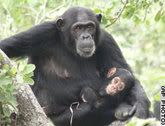
 It can't be said often enough that "nothing in biology makes sense except in the light of evolution." Moving from physical characteristics--color, bone shape, the form of bacterial cells--to genetic characteristics in order to classify organisms--and infer phylogenies--was a giant advance. That the molecular characteristics confirmed what was known using physical characteristics was a breakthrough, and allowed for more sophisticated analyses of organisms that don't have bones or other easily-observable physical features that allow for simple classification into groups: microbes. I've previously pointed out the utility of phylogenetic analysis in tracking the spread of pathogens. A new study on the origin and evolution of HIV employs a similar approach in order to elucidate the history of the virus in Africa.
(Continued at Aetiology).
It can't be said often enough that "nothing in biology makes sense except in the light of evolution." Moving from physical characteristics--color, bone shape, the form of bacterial cells--to genetic characteristics in order to classify organisms--and infer phylogenies--was a giant advance. That the molecular characteristics confirmed what was known using physical characteristics was a breakthrough, and allowed for more sophisticated analyses of organisms that don't have bones or other easily-observable physical features that allow for simple classification into groups: microbes. I've previously pointed out the utility of phylogenetic analysis in tracking the spread of pathogens. A new study on the origin and evolution of HIV employs a similar approach in order to elucidate the history of the virus in Africa.
(Continued at Aetiology).Evolution and the origins of HIV
It can't be said often enough that "nothing in biology makes sense except in the light of evolution." Moving from physical characteristics--color, bone shape, the form of bacterial cells--to genetic characteristics in order to classify organisms--and infer phylogenies--was a giant advance. That the molecular characteristics confirmed what was known using physical characteristics was a breakthrough, and allowed for more sophisticated analyses of organisms that don't have bones or other easily-observable physical features that allow for simple classification into groups: microbes. I've previously pointed out the utility of phylogenetic analysis in tracking the spread of pathogens. A new study on the origin and evolution of HIV employs a similar approach in order to elucidate the history of the virus in Africa.
(Continued at Aetiology).
24 Comments
apollo230 · 1 June 2006
A fascinating article, Dr. Smith! Thank you for sharing it!
One question-what differentiates the various strains of HIV (M,N,O) from each other-is it the constituency of their viral coats?
Wheels · 1 June 2006
So THAT is why Phillip E. Johnson has decided that HIV doesn't cause AIDS. Evolution!
How many more Eliza Janes will it take before science-deniers wisen up?
MrDarwin · 1 June 2006
Doctors and other medical professionals may think evolution is superfluous to their profession, and may embrace "intelligent design" in greater numbers than biologists, but I think it's only because they don't even realize they are making evolutionary assumptions in the first place. Cases like this illustrate that seemingly trivial evolutionary assumptions are fundamental to most biological and medical research. In this case there is the implicit assumption that HIV did not spontaneously generate from thin air (because evolution operates on the assumption that living organisms, including viruses, come from pre-existing ones, with no miracles or intelligent designers required); there is the assumption that, since HIV is not closely related to other human viruses, it almost certainly came to humans from another animal (because living organisms, including viruses, are genetically similar to their closest evolutionary relatives due to their shared common ancestry); and there is the more explicit evolutionary assumption that it probably came from another primate, and probably one closely related to us, because a recent shared common ancestry makes us more genetically similar and thus susceptible to the same pathogens.
DJ · 1 June 2006
Uh, you mean HIV wasn't whipped up in a secret U.S. bioweapons lab and then unleashed on Africa?
What?
What!?!?
Philip Bruce Heywood · 1 June 2006
V. pertinent topic. I have a list of questions and a final comment, Dr. Smith, anyone.
1). Are viruses closest to animal, mineral, or vegetable?
2). Are they invariably agents of disease and death?
3). Can they be properly said to be a life-form?
4). Is it possible they cause ageing by triggering defects during cell replacement in the body?
5). Have definitively virus fossil remains been identified? (The literature I read a decade ago was negative on this.)
6). How widespread are AIDS -type diseases in animals? Are they transmitted the same way as in humans?
7). "It can't be said often enough that 'nothing in biology makes sense except in the light of evolution'". Would it be as true or even more accurate to say, "Nothing in microbiology and especially in viral science makes sense except in the light of virulent, runnaway mutation events"?
7). Apart from their remarkable properties relating to mutation, what property of viruses fits into the neo-darwinistic hypothesis? What part do they have with the Tree of Life, whether it be Darwin's concept of the tree of life, any general biological reconstruction of a "tree of life", or the biblical Tree of Life? Would they fit better on a "tree of death"?
The following quote from the Bible does not have time-connotation in relation to the microbiological events implicit in it, apart from specifying that mineral-mutating, evolving retrogression struck Mankind at a specific point in time. In other words, death and disease, with or without viruses, may have existed before Mankind. Adam became susceptible to them at a specific time. "Cursed is the ground [implicating minerals] for thy sake [because of your actions]; in sorrow shalt thou eat of it ... thorns and thistles[implicating agents of entanglement and pain] shall it cause to bud [morph/mutate] to thee .... till thou return unto the ground .... ." Downright sobering. One might suppose that there is the "evolution" without which nothing in biology makes sense. Mineral-related mutation, and other types of mutation, gone mad, and out to get us and the higher forms of life.
Sir_Toejam · 1 June 2006
*sigh*
steve s · 1 June 2006
'Rev Dr' Lenny Flank · 1 June 2006
Moby Dick · 2 June 2006
I knew that there was link between chimps and HIV!
Gav · 2 June 2006
Mr Heywood - what earlier commentators might have said was that it would be a remarkable piece of scholarship if you could demonstrate that the various scribes who wrote what we now know as the Bible would have known about viruses as a cause of disease.
There's a vast amount been published on biblical references to disease (just check out Medline for example) and there's really no need to make things up that aren't there.
That aside, there's a lot of interesting research going on regarding the virus genome and virus evolution and while most of it is rather technical quite a lot is reasonably accessible to lay people like myself. Google mimivirus for example and see what comes up. Unfortunately you probably do need the technical bits to properly understand the arguments, but it's still interesting as an example of how scientific understanding moves with the evidence. Read, enjoy.
Todd · 2 June 2006
1). Are viruses closest to animal, mineral, or vegetable?
-Mineral. They are little more than bundles of molecules. They can't even self-replicate. They can even be crystalized.
2). Are they invariably agents of disease and death?
-Unknown. The only ones we pay attention to are the ones that cause disease. They are thought to play other roles, with the vast majority being harmless or even beneficial and thus ignored by the medical community, but I have not heard of a case where this has actually been seen in nature.
3). Can they be properly said to be a life-form?
-Open to debate, but I mostly hear "no". They are not capable of actually doing anything on their own, they simply force a cell to do the work for them. They are not capable of reproducing, carrying out any sort of chemical reaction, or having any sort of direct impact on their internal or external environemnt. These are generally considered necessary (albiet not necessarily sufficient) qualities in order for something to be considered a "life-form"
4). Is it possible they cause ageing by triggering defects during cell replacement in the body?
-Possibly, but I have never heard of a virus that accelerates aging and individuals age even without viruses, so it is unlikely. It would confer no selective advantage to the virus, at best doing nothing and at worst (the more likely scenario) shortening the life span of the host and thus making it less likely for them to spread to other hosts. I am also not clear as to exactly what mechanism a virus could use to cause aging. What we term "aging" is really a combination of a wide variety of time-related issues, I would be extremely surprised if one virus could cause all those seemingly unrelated effects commonly associated with aging. One or two, yes, but not all of them.
5). Have definitively virus fossil remains been identified? (The literature I read a decade ago was negative on this.)
-viruses are small, far smaller than the smallest cell. Even if virus fossils were everyone, which I doubt, we would probably not be able to find them because they are so small. Any easily recognizable fossil features would likely be too small to be fossilized. Although it is possible, I would be very surprised.
6). How widespread are AIDS -type diseases in animals? Are they transmitted the same way as in humans?
-AIDS-type? Do you mean immunodifficieny viruses or retroviruses? Retroviruses are relatively rare in animals, and I know little about immunodifficiency viruses outside of primates.
7). "It can't be said often enough that 'nothing in biology makes sense except in the light of evolution'". Would it be as true or even more accurate to say, "Nothing in microbiology and especially in viral science makes sense except in the light of virulent, runnaway mutation events"?
-I assume by "virulent, runnaway mutation events" you mean viruses. It is not clear that is what they are. There are some who think viruses may have been a beneficial gene transfer system that got out of control. And although viruses have a huge impact on microbiology, it has not yet been demonstrated in any reliable way that they are an essential component. They may be, but we have done a very good job of figuring out microbiology with little help from viruses until relatively recently. The most important impact viruses have had is in reverse transcriptase, but this is simply an analysis tool.
7). Apart from their remarkable properties relating to mutation, what property of viruses fits into the neo-darwinistic hypothesis? What part do they have with the Tree of Life, whether it be Darwin's concept of the tree of life, any general biological reconstruction of a "tree of life", or the biblical Tree of Life? Would they fit better on a "tree of death"?
-There is no "tree of death". Where viruses fit phylogenically is a matter of great debate. Many think that viruses split of from their hosts, or relatives of their hosts, directly, meaning many of our viruses would have more in common with us than they would with many viruses of birds, for instance. They might be a beneficial gene transfer system that went haywire, or evolutionarily-generated genetic parasites that developed the ability to move to knew cells. Of course something like influenza is found in a wide variety of organisms, would this be due to convergent evolution or a single virus that spread and then specialized? Although it may be known for influenza, I am not that familiar with the details of its phylogeny, it is certainly a question for some viruses.
On the other extreme, some people think that viruses predate cellular life entirely, and that they ultimately developed into pathogens when cellular life evolved and began to outcompete them. Under this hypothesis the viruses today are mere shells, pardon the pun, of what they once were, having degenerated because their free-living ancestors could not compete with the more versatile cells. If this is the case this would put their status as non-life-forms more into question, but this hypothesis appears pretty far from the mainstream. But that doesn't make it wrong, it is testable and additional information needed to test it is currently being sought.
These ideas are also not mutually exclusive, it is possible that we are incorrectly lumping two or more completely different biological groups into one due to them evolving convergently and thus appearing very similar dispite have wildly different ancestries (it wouldn't be the first time we had done this).
stevaroni · 2 June 2006
GT(N)T · 3 June 2006
Todd wrote:
1). Are viruses closest to animal, mineral, or vegetable?
-Mineral. They are little more than bundles of molecules. They can't even self-replicate. They can even be crystalized.
3). Can they be properly said to be a life-form?
-Open to debate, but I mostly hear "no". They are not capable of actually doing anything on their own, they simply force a cell to do the work for them. They are not capable of reproducing, carrying out any sort of chemical reaction, or having any sort of direct impact on their internal or external environemnt. These are generally considered necessary (albiet not necessarily sufficient) qualities in order for something to be considered a "life-form"
_________________
Viruses contain nucleic acids and they evolve. They may be a "bundle of molecules", but so are we. They are reproductive parasites. Like many parasites they may have become progressively simplified.
"They are not capable of actually doing anything on their own, they simply force a cell to do the work for them. They are not capable of reproducing, carrying out any sort of chemical reaction, or having any sort of direct impact on their internal or external environemnt." Forcing a cell to do work seems like the virus is doing something. As for carrying out a chemical reaction, they replicate and synthesize proteins, both with the necessary assistance of the host. Finally, they certainly have a 'direct' impact on their environment - ever had a cold? This impact, by the way evolves. Viruses that produce a specific impact on the host (think 'sneeze') spread more easily.
Viruses are alive. They evolved in some manner from the same set of ancestors as we did. They, like all living things, are our cousins, albeit very distant cousins.
Wheels · 3 June 2006
The ability to undergo evolutionary changes doesn't make them living things. A virus doesn't metabolize anything, a virus doesn't reproduce (instead it self-destructs, and the cell it happens to be stuck on builds new viruses, which is rather like saying robots reproduce because people make more of them when they break). A set of proteins can undergo evolutionary changes like a virus can. That doesn't make prions living things.
The appeal to the virus's "ability" to force cells into action is rather like saying that mercury has the ability to force DNA to break up. Mercury also has an effect on the environment, by causing cancers like a cold virus causes colds. Mercury combines with certain chemicals in the body, does this mean Mercury is metabolizing and carrying out the chemical reactions necessary for life?
I wouldn't call them parasites so much as particularly bossy bits of debris.
There are several version of the "Essential characteristics of life" checklist, some of which even preclude viruses by making the possession of cells a requirement. Assuming we ignore that particular idea, viruses fall short on their inability to reproduce and their apparent lack of metabolism. Most of the lists generally include those two requirements.
I haven't heard of a virus that can metabolize substances, but no virus can "reproduce." Instead, I think it would be better to say that the leftover bits are used by an outside agent to "replicate" the original as closely as possible. The virus itself doesn't do anything other than explode, from that point on the cell does the rest.
Vyoma · 3 June 2006
Vyoma · 3 June 2006
Todd · 3 June 2006
Stevatoni · 3 June 2006
Todd · 3 June 2006
Philip Heywood · 4 June 2006
I've been away. I wasn't fishing for trilo's. It's a privelege to have a page visited by a scientist. The possibility of different classes of organisms perhaps having differences in their attendant viruses is enlightening. What you say rings true.
GT(N)T · 4 June 2006
Much of the argument about whether viruses are alive is reminiscent of the Creationist argument that there are fundamental breaks in the continuity of life. They (the more honest Creationists) say that God created the several 'kinds' independently. They say that man is unrelated to 'lower' organisms. Creationists would certainly agree that viruses are not alive.
Viruses possess nucleic acids. Viruses evolve. Those two traits are how I define life. If you have a different definition you will reach a different conclusion.
By the way, I don't mean to suggest that you are a Creationist. Your explanation requires no supernatural cause. We're arguing about definitions not religion.
Vyoma · 4 June 2006
stevaroni · 4 June 2006
'Rev Dr' Lenny Flank · 4 June 2006